Waikīkī surf guide
Safety starts with clear instruction and attention
A practical look at surf lesson safety, grounded in Waikīkī reef, trade winds and a real day with the SFC crew.
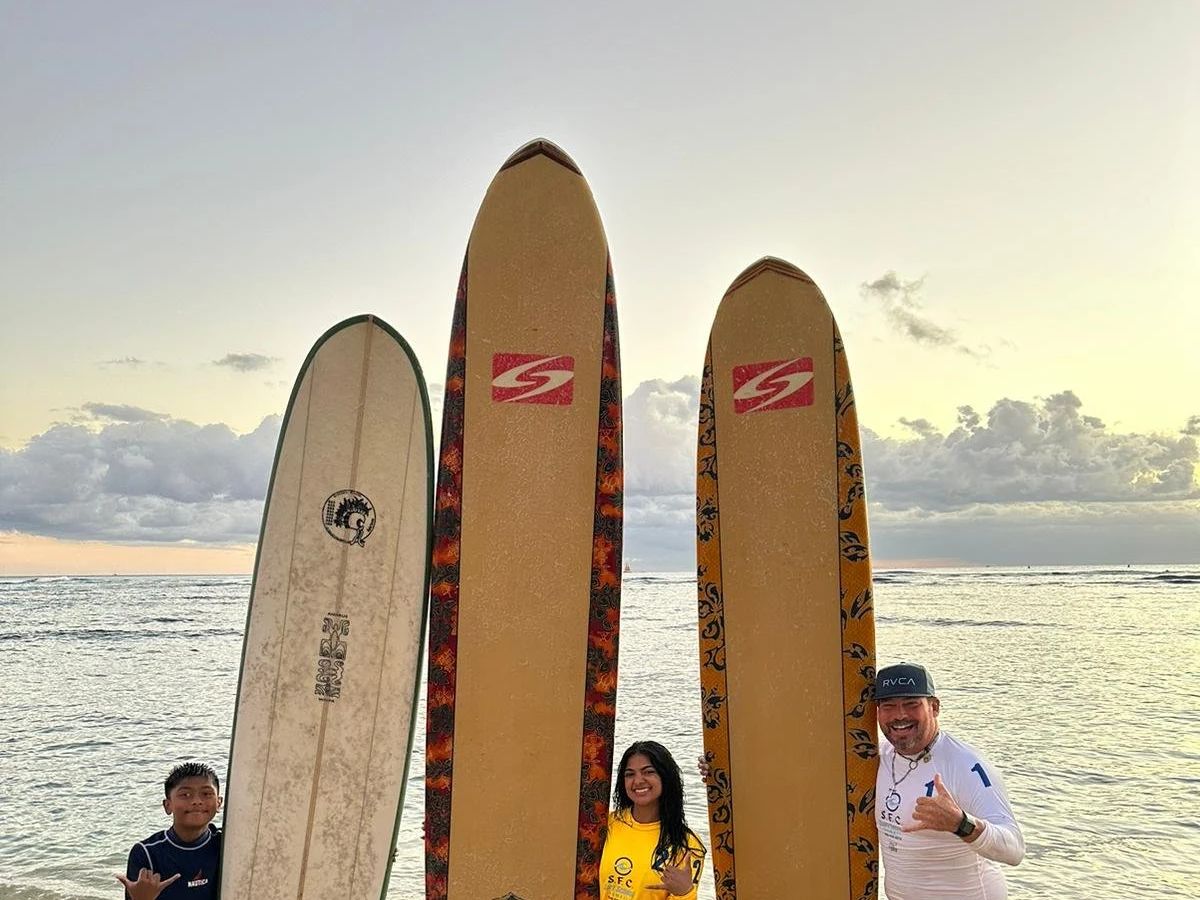
How SFC keeps a lesson safe
Surfing is an ocean sport, and a good lesson is built around managing that. SFC runs lifeguard-certified instructors at up to four students per instructor, teaches the pop-up on dry sand first, and starts everyone in whitewater close to shore before anyone paddles for a green wave.
- Listen to the whole beach talk — it covers the exact hazards for that day’s conditions.
- Keep your leash on and your board between you and the open ocean, never between you and another person.
- When you fall, fall flat and shallow, cover your head as you come up, and find your board before you stand.
- Watch the reef: the South Shore is shallow in spots. Shuffle your feet and don’t push off the bottom hard.
- Stay in your depth. If you can’t comfortably stand or tread where the class is, tell your instructor right away.
- Hydrate and re-apply sun protection — heat and sunburn end more beach days than waves do.
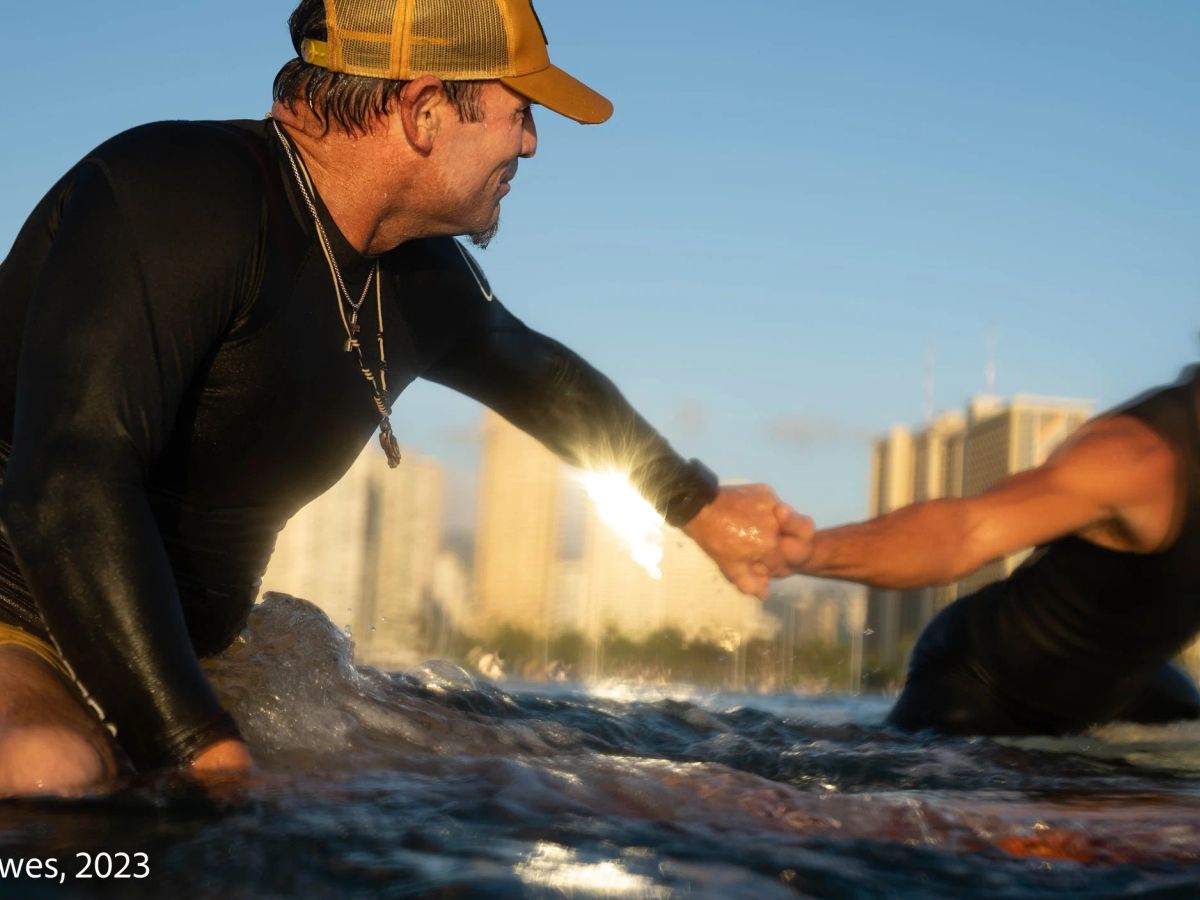
Rip currents, in plain terms
A rip current is a narrow stream of water flowing back out to sea. It won’t pull you under — it pulls you out. If you’re ever caught in one, don’t fight straight back to shore: stay calm, keep your board, signal your instructor or a lifeguard, and paddle parallel to the beach until you’re out of the pull, then angle in.
On a lesson you stay in a supervised zone, but knowing this makes the whole ocean less frightening.
Tell the crew what they can’t see
Injuries, pregnancy, seizures, heart conditions, low swimming confidence or a nervous first-timer — share it at booking or check-in. It changes where the instructor puts you and how they watch you, and none of it is a reason to sit out. The more honest the crew, the safer the water.
Keep planning